
Recent Posts

3 Common Dehumidifier Myths Debunked
May 29, 2026
Autumn: The Unsuspecting Mould Season
Apr 06, 2026

NWT Partners with Sensitive Choice
Mar 13, 2026
Top 4 Dehumidifier Mistakes to
Feb 23, 2026
Tags
Autumn: The Unsuspecting Mould Season - What Every Australian Homeowner Needs to Know
NWT Australia
Apr 06, 2026
0 comments
If you've ever noticed dark spots appearing on your bathroom ceiling in April, or that musty smell lingering in your bedroom as the weather cools, you're experiencing the autumn mould phenomenon firsthand. The problem is that by the time you notice it, the mould has already established itself. This blog post will walk you through exactly why autumn becomes such a critical mould season in Australia, what specific conditions trigger rapid mould growth, and most importantly, what you can do right now to prevent it from taking hold in your home.
Understanding Why Autumn is Australia's Hidden Mould Season
When we think about mould growth, our minds typically jump to summer's heat and humidity. But autumn occupies a unique position in the Australian climate calendar: it's a transitional season where multiple environmental factors align perfectly to create an ideal breeding ground for mould. This isn't just a minor inconvenience; mould can cause serious health issues, damage your home's structure, and create an environment where allergens thrive.
There are three specific, interconnected reasons why autumn becomes such a dangerous season for mould in Australian homes. Understanding each of these will help you recognise the risks in your own home and take preventative action.
1: The Rainforest Effect - Condensation as the Perfect Mould Catalyst
As autumn arrives and temperatures begin to drop, especially in the south, Australian homeowners naturally start closing windows and doors to keep their homes warm. This is a sensible response to the cooling weather, but it creates an unexpected problem: the "rainforest effect." This phenomenon occurs when warm indoor air meets cooler surfaces throughout your home, creating condensation that transforms your interior into a mould-friendly environment.
This condensation is the number one trigger for mould growth. Mould doesn't need much to thrive, just three things: moisture, a food source (which can be as simple as dust or paint), and darkness. Condensation provides the moisture component in abundance, and autumn's reduced sunlight provides the darkness. The result is explosive mould growth in areas you might not even think to check.
Windows are often the most obvious place to see this effect. If you've noticed water droplets on your windows on cool autumn mornings, that's condensation at work. But the problem extends far beyond what you can see. Condensation also forms on walls, particularly on external walls that are exposed to cooler outdoor temperatures. It accumulates in wardrobes, especially those built into external walls or in corners with poor air circulation. It develops in bathrooms, laundries, and kitchens. The danger is that this condensation often goes unnoticed until mould has already established itself. By the time you see black spots on a wall or ceiling, the mould colony has been growing for days or weeks. The moisture has seeped into materials like drywall, insulation, and timber framing, creating a much larger problem than surface mould.
One particularly vulnerable area in Australian homes is the space between window frames and walls. As condensation forms on windows, water runs down the glass and collects at the frame. If this water isn't properly drained away it seeps into the wall cavity, creating a hidden mould farm that you can't see until significant damage has occurred.
Bathrooms and laundries are another critical zone during autumn. These rooms generate significant moisture from showers and washing machines. In summer, this moisture can escape through open windows and doors. But as autumn arrives and homes seal up, this moisture has nowhere to go. It condenses on walls, mirrors, and ceiling surfaces, creating perfect conditions for mould growth. Many Australian homeowners don't realise that their bathroom exhaust fan, while helpful, often isn't enough to remove all the moisture generated during a hot shower on a cool autumn day.
The rainforest effect is particularly pronounced in homes with poor insulation or older construction. If your home was built before modern insulation standards, the temperature differential between indoor and outdoor surfaces is even greater, intensifying condensation formation.
Reason 2: Decaying Organic Matter and Airborne Mould Spores
While the rainforest effect creates the moisture conditions that mould needs, autumn also brings another critical factor: a massive increase in organic matter both outdoors and indoors. This creates a surge in mould spores in the outdoor air, which can travel into your home.
Mould reproduces through spores, which are microscopic particles released into the air. These spores are incredibly efficient at traveling; they can float on air currents, attach to clothing and hair, and enter homes through windows, doors, and ventilation systems. During autumn, when organic matter is actively decaying outdoors, the concentration of mould spores in the air increases dramatically.
Once inside your home, these spores are looking for a suitable place to land and grow. And thanks to the condensation created by the rainforest effect, your home is offering them exactly what they need: moisture. The combination of increased airborne spores and increased indoor moisture creates a perfect storm for mould proliferation.
Gutters are a particularly high-risk zone during autumn. As leaves accumulate in gutters, they create a damp, organic-rich environment where mould thrives. This mould then releases spores that can be carried into your home through roof vents, or simply through the air. If your gutters aren't cleaned regularly during autumn, they become a mould factory that continuously supplies your home with fresh spores.
Garden beds and compost areas are another source of concern. If you have a compost bin or garden beds close to your home, the decomposing organic matter in these areas is generating mould spores constantly during autumn. These spores drift on the wind and can enter your home through any opening. This is particularly problematic if your bedroom windows or living areas face your garden.
One often-overlooked source of organic matter is the contents of your wardrobes and storage areas. As you bring out autumn and winter clothing, these items may have been stored in damp conditions during summer. Mould spores can be present on fabrics, and if these items are stored in areas with poor air circulation and high humidity, the mould can continue to grow and spread to other items.
Bathrooms are particularly vulnerable to this combination of factors. The bathroom is already a high-moisture environment due to showers and baths. During autumn, when ventilation is reduced and condensation increases, bathrooms become ideal environments for mould. The organic matter present in bathrooms provides abundant food sources for mould spores.
Reason 3: Reduced Sunlight
As autumn progresses and winter approaches, the days grow noticeably shorter. In Australia, by June, some regions receive only around nine hours of daylight. This dramatic reduction in sunlight has a direct impact on mould growth in your home, because sunlight has natural anti-mould properties that most people don't realise.
Ultraviolet (UV) radiation from sunlight is a natural mould inhibitor. When sunlight streams through windows and illuminates interior surfaces, the UV radiation actively suppresses mould growth. This is why mould tends to grow in dark corners, under furniture, and in areas that don't receive direct sunlight. During summer, when days are long and the sun is intense, these natural UV rays help keep mould at bay. But as autumn arrives and daylight hours decrease, this natural protection diminishes.
The impact is particularly noticeable in specific areas of your home. Wardrobes and closets, which receive little to no direct sunlight even in summer, become increasingly vulnerable to mould during autumn. If you have a wardrobe on an external wall, the combination of reduced sunlight, cooler external temperatures creating condensation, and sealed-up conditions creates an ideal mould environment. Clothes stored in these spaces can develop mould, which then spreads to other items.
Bathrooms and laundries, which typically have small windows or no windows at all, are similarly affected. The reduction in sunlight means that any moisture in these rooms has less natural UV protection against mould growth. A bathroom that stayed relatively mould-free during summer, thanks to long daylight hours and open windows, can suddenly develop mould problems in autumn.
Bedrooms are another area where reduced sunlight becomes problematic. Many Australian bedrooms have windows that face away from the morning sun, or are shaded by trees. During autumn, when the sun's angle is lower and daylight hours are shorter, these rooms receive even less sunlight. If condensation forms on walls or windows in these rooms, the reduced sunlight means there's less natural UV protection to prevent mould growth.
Even living areas and kitchens, which typically receive more sunlight than other rooms, experience a noticeable reduction in UV protection during autumn. This is particularly true in the afternoon and evening, when the sun sets earlier. Damp spots that might have dried out quickly in summer due to afternoon sunlight can now persist for hours or even days, giving mould spores time to establish themselves.
The psychological impact of reduced sunlight is also worth considering. As daylight decreases, many people naturally spend more time indoors with windows and doors closed. This reduces air circulation throughout the home, allowing moisture to accumulate and mould to spread more easily.
The Health Impact of Autumn Mould
Understanding why autumn is a dangerous mould season is important, but it's equally important to understand why this matters for your health and your home. Mould isn't just an aesthetic problem or a minor inconvenience; it can have serious consequences.
Mould releases spores and volatile organic compounds (VOCs) into the air. When you breathe these in, they can trigger allergic reactions, asthma attacks, and respiratory infections. People with existing respiratory conditions, allergies, or compromised immune systems are particularly vulnerable. Children and elderly family members are also at higher risk of experiencing negative health effects from mould exposure.
Beyond health impacts, mould can cause significant structural damage to your home. Mould feeds on organic materials like wood, drywall, and insulation. If left unchecked, mould can weaken timber framing, cause drywall to deteriorate, and reduce the effectiveness of insulation. This damage can be expensive to repair and can compromise the structural integrity of your home.
Mould also creates a musty odour that permeates fabrics, furniture, and the air itself. This smell is difficult to eliminate once it has established itself, and it can make your home feel uncomfortable and uninviting.
The Fix: Maintaining Optimal Indoor Humidity
Now that we've explored why autumn is such a dangerous mould season, the question becomes: what can you do about it? The answer lies in understanding and controlling indoor humidity.
The most effective way to prevent mould growth is to keep your indoor humidity between 40 and 60 percent. This range is low enough to prevent mould growth but high enough to maintain comfort and avoid the dry air that can cause respiratory irritation. When humidity stays within this range, mould spores that enter your home are far less likely to find the moisture they need to germinate and grow.
Maintaining this humidity level during autumn requires a multi-faceted approach. First, you need to understand your current humidity levels. Many people have no idea whether their home is too humid or not. Investing in a simple humidity meter (hygrometer) is an inexpensive way to monitor this. You can find these at hardware stores or online for just a few dollars, and they provide valuable information about conditions in different rooms of your home.
Once you understand your humidity levels, you can take action. If your home's humidity is consistently above 60 percent during autumn, you need to remove moisture from the air. This is where dehumidifiers become invaluable.
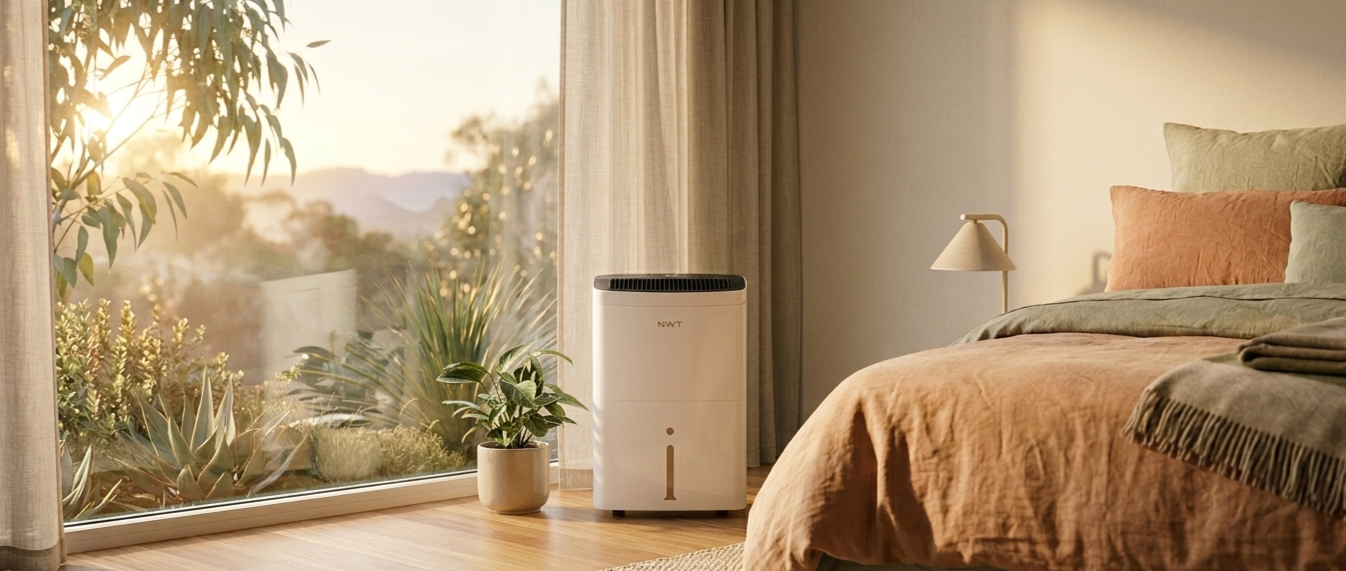
For Australian homeowners, choosing the right dehumidifier is important. Not all dehumidifiers are equally effective, and some can be noisy, energy-intensive, or unreliable. This is where NWT Australia's range of dehumidifiers comes in. NWT dehumidifiers are specifically designed for the Australian climate and home environment. They're Sensitive Choice–approved, meaning they meet strict environmental and health standards. They're also designed to be energy-efficient, so running them during autumn won't dramatically increase your electricity bills.
NWT dehumidifiers come in various sizes and capacities, so you can choose the right model for your home's needs. A smaller dehumidifier might be perfect for a bedroom or bathroom, while a larger model could handle a living area or multiple rooms. The key is to choose a dehumidifier that's appropriately sized for the space you're trying to protect.
Beyond using a dehumidifier, there are other steps you can take to manage humidity during autumn:
Improve ventilation: Even though it's cooler, try to open windows and doors for short periods during the day, especially after showers or cooking. This helps remove moisture-laden air from your home. If you have exhaust fans in bathrooms and kitchens, use them during and for 20-30 minutes after showers or cooking.
Fix leaks and water damage: Check your home for any signs of water leaks or damage. Repair leaky pipes, fix roof leaks, and address any water damage promptly. These are sources of excess moisture that can fuel mould growth.
Improve insulation: If your home has poor insulation, the temperature differential between indoor and outdoor surfaces increases, intensifying condensation. Improving insulation in key areas can help reduce this problem.
Clean gutters and downpipes: Ensure your gutters are clean and your downpipes are directing water away from your home. This prevents water from accumulating near your home's exterior, which can lead to moisture seeping into walls.
Monitor high-risk areas: Pay special attention to bathrooms, laundries, wardrobes, and areas with external walls. These are the places where mould is most likely to develop during autumn.