
Recent Posts

3 Common Dehumidifier Myths Debunked
May 29, 2026

Autumn: The Unsuspecting Mould Season
Apr 06, 2026
NWT Partners with Sensitive Choice
Mar 13, 2026
Top 4 Dehumidifier Mistakes to
Feb 23, 2026
Tags
NWT Partners with Sensitive Choice for #WorldSleepDay
Elijiah Pitman
Mar 13, 2026
0 comments
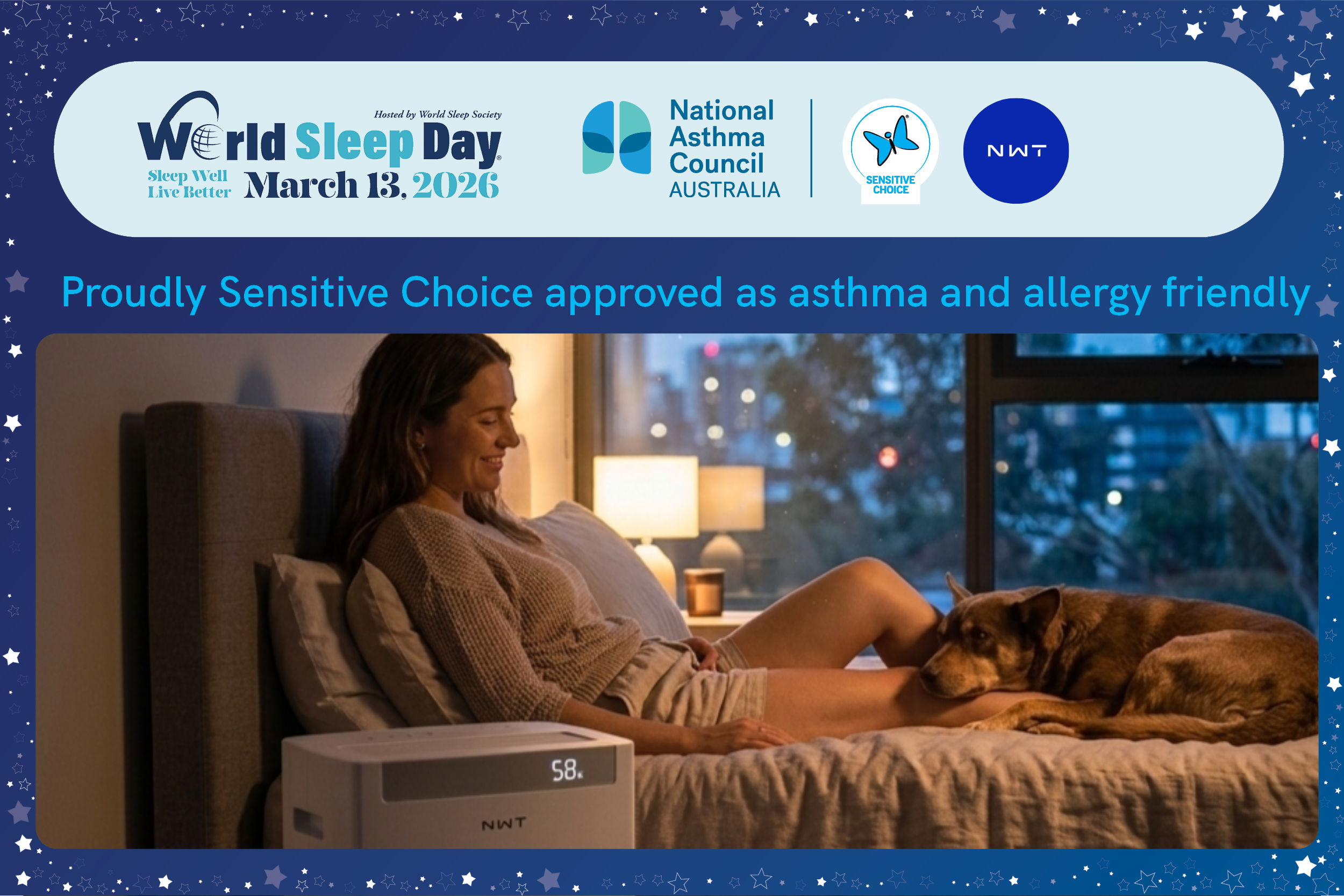
Friday 13 March is World Sleep Day, a day hosted by the World Sleep Society to raise awareness about the importance of sleep health. This year’s theme is ‘sleep well, live better’. Good sleep is essential to overall health and wellbeing; it promotes wellness and resilience across all aspects of the body and mind. Sleep is just as important as nutrition and exercise.
This year, we are supporting the National Asthma Council Australia’s Sensitive Choice program in raising awareness about the important connection between sleep and asthma. About 1 in 3 people with asthma have sleep disturbances – this is associated with worse asthma symptoms, poor quality of life and increased asthma-related healthcare utilisation.
Asthma symptoms can disrupt your sleep, and sleep disturbances can in turn affect asthma control and quality of life. This means that poor asthma control is linked to worsened sleep quality, whilst poor sleep quality can be a sign of poorly controlled asthma.
Experiencing any type of difficulty breathing when sleeping or waking up should not be ignored. People with asthma experience symptoms in different ways. Be aware if your sleep is being affected by any of the following:
coughing
wheezing
shortness of breath
chest tightness.
It’s time to make your sleep health a priority. If you experience any asthma symptoms during sleep or when waking up, this is a sign that your asthma is not well-controlled. Frequent night-time symptoms are an indicator of an increased risk of asthma flare-ups. It’s important not to accept night-time asthma symptoms as ‘normal’. Signs of well-controlled asthma include having no night-time asthma symptoms and no asthma symptoms when waking up.
Advice for improving asthma management:
Take your medications as prescribed by your doctor and check that medications are not expired.
Ensure that you are using your asthma inhalers correctly. Incorrect device technique may mean that the medications are trapped in your mouth or throat instead of reaching the airways where they are needed.
Schedule an asthma check-up with your doctor. This is a great opportunity to ask about sleep when discussing your asthma symptoms and have your asthma action plan reviewed.
Improve your sleep environment by minimising or removing common triggers for asthma and allergies such as dust mites, mould spores or pollen. Take the National Asthma Council Australia’s asthma control check to see if your asthma is well controlled.
- NWT dehumidifiers help asthma management by reducing indoor humidity to below 50–60%, which inhibits the growth of common allergens like mould, mildew, and dust mites. By removing excess moisture, they also reduce the, "heavy" air that can make breathing difficult, potentially reducing asthma symptoms.
Elevate your space to be more asthma friendly
The National Asthma Council Australia’s Sensitive Choice program helps people identify asthma and allergy friendly products. All products and services with the iconic Sensitive Choice blue butterfly have been rigorously reviewed and approved by an independent expert panel that determines their potential benefit to people with asthma and allergies.
NWT is a proud partner of the Sensitive Choice program, with NWT dehumidifiers Sensitive Choice approved as asthma and allergy friendly.